Water left in sprinkler lines over winter can freeze, expand and crack a pipe or a valve. A blowout uses compressed air to push that water out, so there's nothing left in the lines to freeze. The work all happens outside, and most of the time you don't need to be home for it.
Before we arrive
We give you a day for your blowout. If you'd like a closer time window, text us that morning at (360) 389-2557.
We need to reach the water valves for the sprinkler system, including the backflow preventer, and the controller, the box that runs your watering schedule. If either one is inside the house, someone needs to be home to let us in. If they're in the garage, we need a way into the garage.
On the day, please unlock any gates and keep pets inside.
How the blowout works
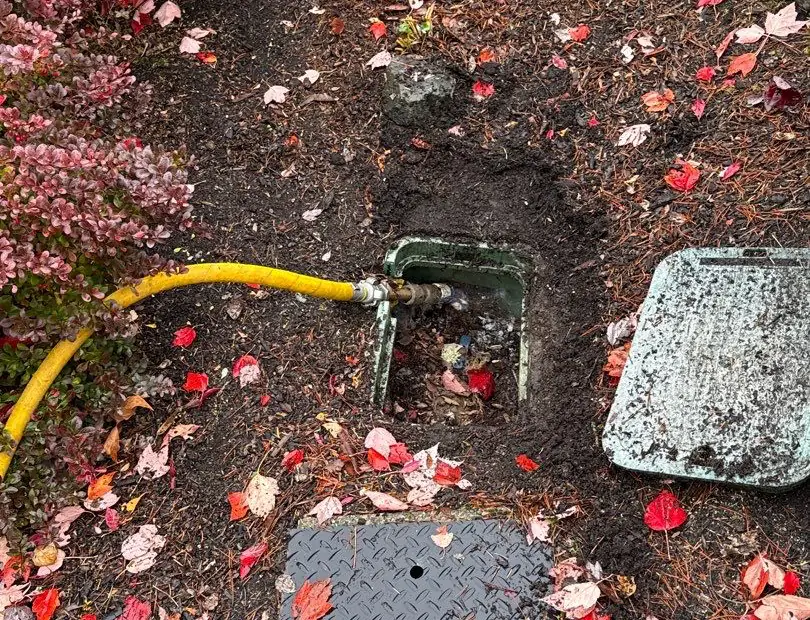
- We find the backflow preventer and close its valve. If there's a shutoff valve ahead of it, we close that too.
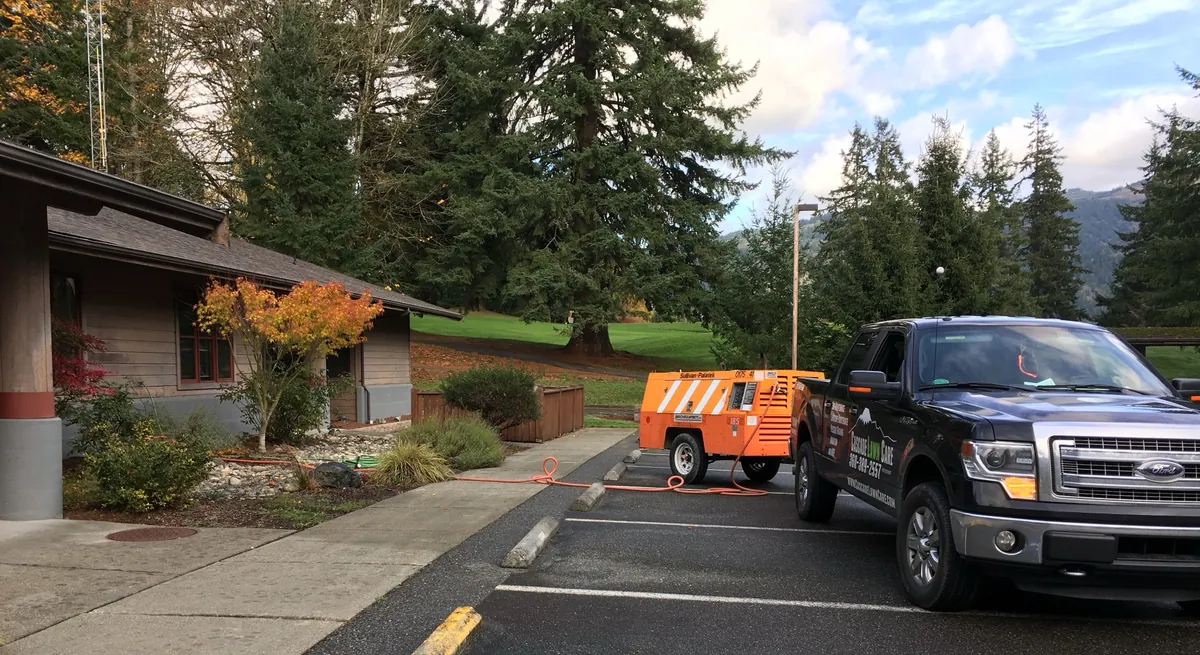
- We connect our air compressor to the system's blowout port and open the valve on the compressor.
- We work through the system until every zone has been blown out.
- We disconnect the compressor and close any valves we opened.
What you'll see in the yard
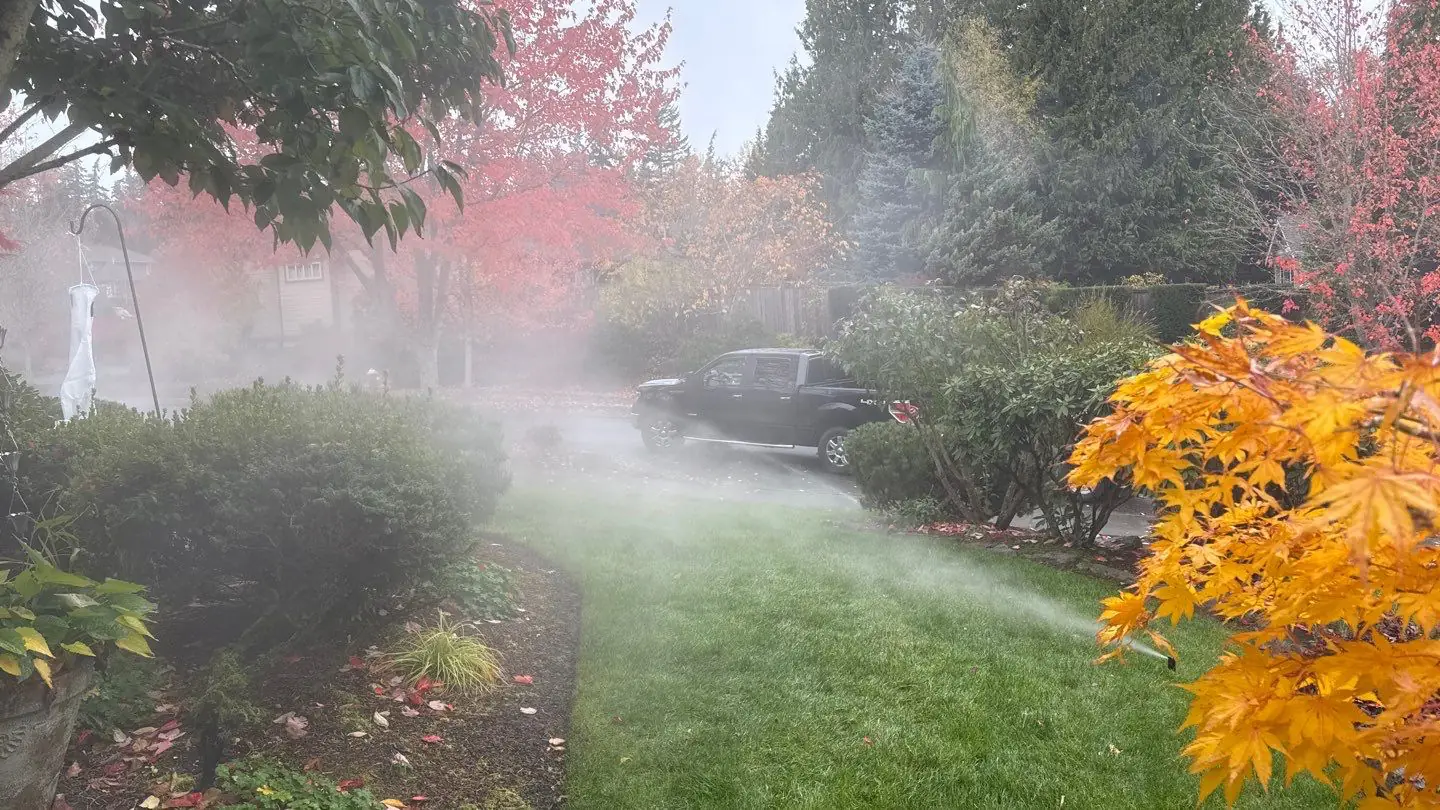
At first a zone looks like it's watering as usual, as the air pushes water out through the heads. As the zone empties, the spray turns into a fine mist. When the heads give off only short puffs, that zone is clear and we move on to the next.
How we leave it
- The valves are closed.
- The controller is switched off. Battery-powered controllers have their batteries taken out.
- Any valve boxes we opened are closed up.
Leave the controller off and the valves closed until spring. Before the system runs again it needs a spring startup: we charge it, walk every zone and set the controller for the season.
If we spot a broken head, a leak or anything else that needs fixing, we make a note of it and send you a quote for the repair next season.
Frequently asked questions
No, as long as we can get to the water valves and the controller. If either one is inside the house, we need someone home to let us in. If they're in the garage, we need access to the garage.
Yes. Rain doesn't get in the way of a blowout, so we go ahead as planned.
An early cold snap is unlikely to do damage. This time of year the cold only reaches the top of the soil, so the lines at risk are the ones laid very shallow. Frost doesn't get deep into the ground until later in winter, around January. Still, the sooner the water is out, the better.
Yes. Text us at (360) 389-2557 on the morning of your blowout and we'll give you a closer window.
We note it and send you a quote, so the repair can be done before the system runs again next season.
Yes, if you can get a compressor that moves enough air. We use a towable diesel compressor rated at 185 cubic feet per minute (CFM). A typical garage compressor puts out a small fraction of that, so it runs short of air long before a zone is clear and leaves water sitting in the lines. The pressure also has to stay within what your pipes and heads are rated for, because too much can crack a pipe or blow a head apart.